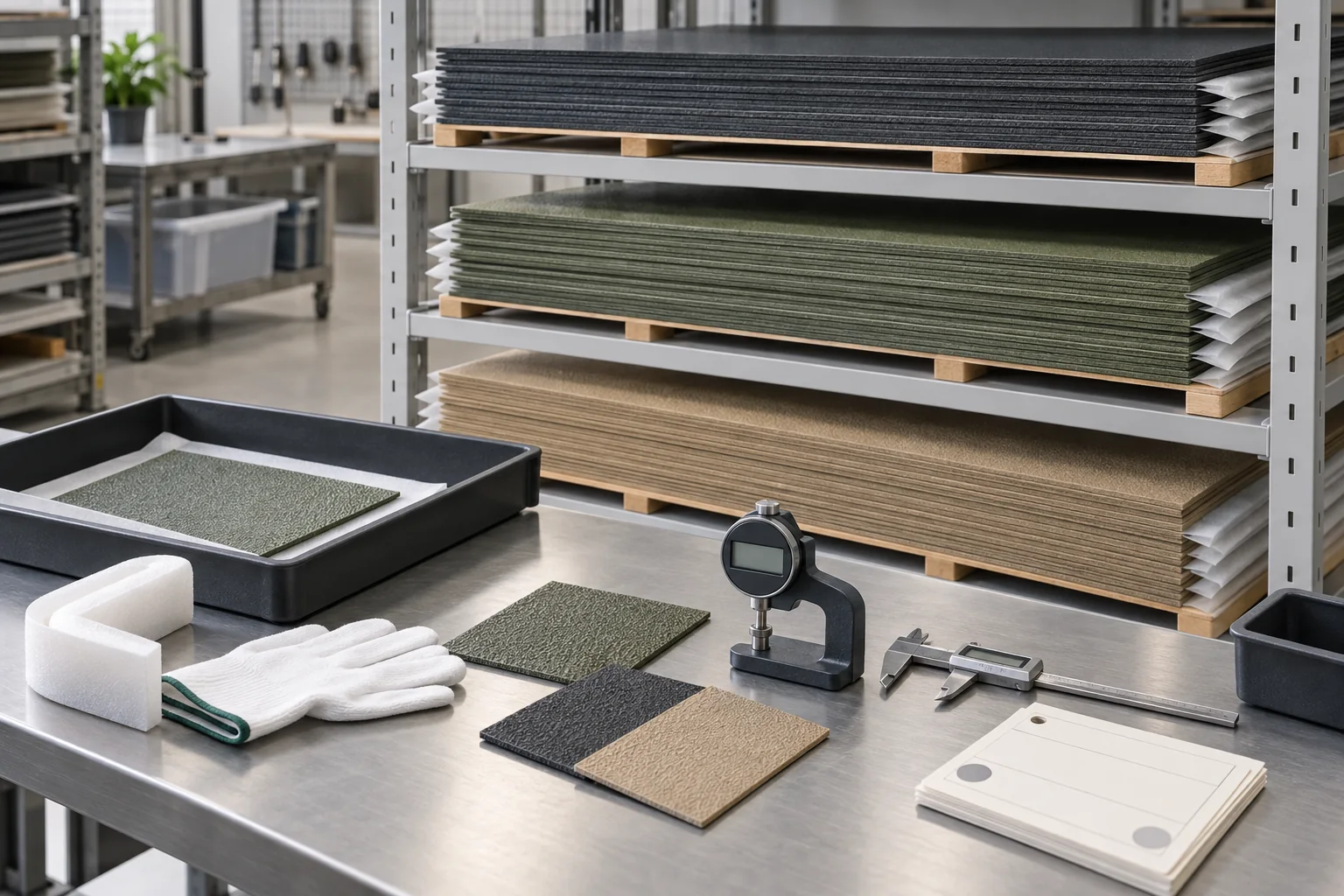
Why does incoming sheet control matter to an OEM buyer?
The finished molded part inherits more than a material name. Grade, nominal gauge, color, texture, decorative construction, orientation and surface condition can affect forming behavior and the approved appearance. A receiving record connects the supplier shipment to the purchase order, work order, first article and finished SKU. It also gives both parties a defined place to stop a mix-up before forming, trimming and assembly add cost.
Incoming inspection decision map
| Check | Evidence to retain | Typical disposition question |
|---|---|---|
| Identity | Supplier, product/grade, color, texture, gauge and shipment reference | Does it match the released material callout? |
| Traceability | Lot or work-order identity linked to receipt and production traveler | Can finished units be traced to the material received? |
| Dimensions | Agreed sampling of thickness and blank/sheet size | Is the material within the purchase specification? |
| Appearance | Physical comparator, viewing condition and photos of exceptions | Are color, texture, gloss and direction appropriate for the SKU? |
| Condition | Inspection of contamination, scratches, edge damage, flatness and masking | Can the condition affect forming, cosmetics or yield? |
| Documents | Required supplier paperwork and revision status | Is the evidence required by the purchase order complete? |
What should the purchase specification identify?
At minimum, use the supplier’s exact product designation rather than the generic word “Kydex.” Add nominal gauge, permitted tolerance or supplier standard, color and texture code, sheet or blank dimensions, surface/masking requirement, orientation where relevant, approved substitutions and required documentation. The sheet and formed-wall guide explains why starting gauge and the minimum wall on a formed part are separate controls.
What do KYDEX technical resources establish?
SEKISUI KYDEX’s standard product specification lists standard sheet dimensions, color/texture availability and limited masking availability, while noting that individual products can vary. Its water-absorption bulletin explains that plastics absorb some water and that even small moisture content can affect dimensions, properties or appearance; laboratory values are guidance and users must test suitability. The supplier’s product FAQ does not recommend storing KYDEX sheet outdoors. These sources support controlled receiving and indoor preservation, but they do not create one universal storage limit for every grade and program.
How should sheet be stored after receipt?
Keep identified material indoors, clean, dry and protected from uncontrolled weather, contamination and surface damage. Support the full sheet so handling or long-term storage does not create avoidable deformation. Separate grades, colors, textures, gauges and customer-owned material; do not depend on visual similarity. Preserve labels and protective layers according to the released material and supplier guidance, and keep partial sheets or reusable offcuts tied to their identity.
Does KYDEX sheet always require drying?
No blanket instruction should be written from a material family name alone. KYDEX is described as having low water absorption relative to more hygroscopic plastics, and the supplier’s forming guidance says drying may be required when material has been stored for a period in a humid environment. The production response should therefore follow the exact grade, storage history, observed condition and current supplier guidance rather than automatically adding or omitting a drying step.
How should suspect material be handled?
Segregate it physically and in the production record. State the reason: identity mismatch, missing evidence, gauge result, damage, contamination, questionable storage or appearance deviation. Then define who can release, return, reclassify or test it. A small forming trial may help assess process behavior, but it should not silently replace the buyer’s approved material or golden sample.
How does lot identity support repeat orders?
Lot identity lets the team compare a visual or forming change with the actual material used. It should connect receiving, cutting, forming, trimming, assembly and pack-out records at the level agreed for the program. If a supplier, grade, color, texture, gauge or relevant construction changes, evaluate whether the appearance approval, process window or first article needs to be repeated.
What should a buyer include in the RFQ?
Send the intended product, target material designation, color/texture, gauge, forecast quantity, cosmetic expectations, traceability depth, document requirements and any customer-supplied material rules through the RFQ. CarryMold can then confirm the practical receiving and storage plan with the materials, manufacturing and quality requirements before sampling.
Frequently asked questions
Is the word KYDEX enough for a purchase order?
No. KYDEX is a material brand with multiple products. Release the exact product or approved equivalent plus gauge, color, texture and other program requirements.
Can mixed lots be used in one private-label SKU?
Only under the buyer’s approved lot and appearance rules. A program may require segregation or additional comparison when visual consistency matters.
Should every sheet be measured?
The sampling plan should reflect supplier documentation, purchase requirements, risk and production history. This guide does not prescribe one universal inspection frequency.
Does an accepted incoming lot approve the finished product?
No. Incoming acceptance confirms material evidence and condition; forming, dimensions, appearance, assembly, function and packaging still require their own release criteria.
Link receiving checks to the released material identity
The KYDEX material guide defines the grade, gauge, color and texture baseline that incoming inspection, lot segregation and substitution controls must preserve.
Turn the material callout into a traceable receiving plan.
Share the application, target quantity and launch requirements. We will outline the most practical sampling path.