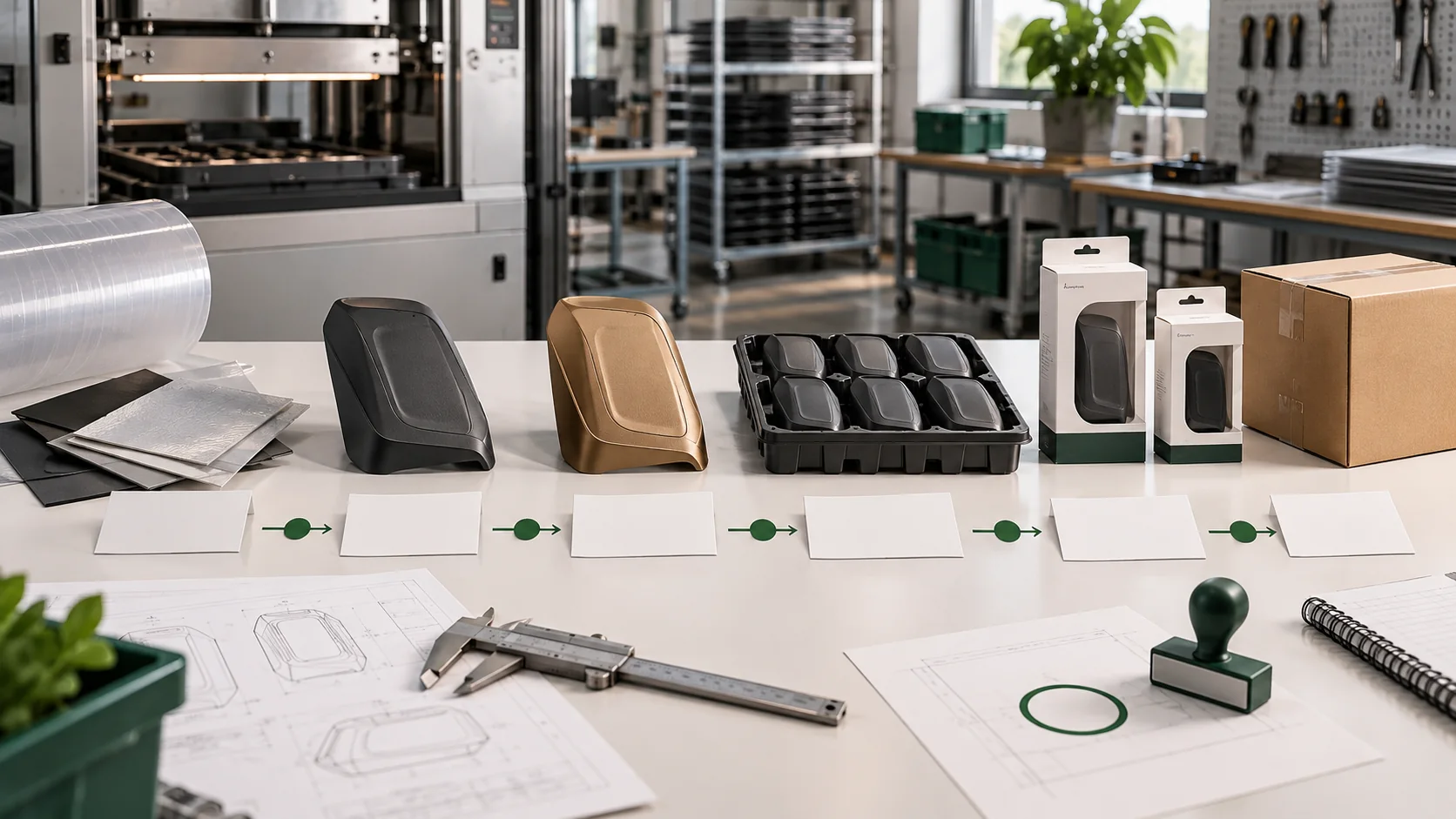
What determines an OEM KYDEX holster lead time?
The schedule depends on whether the program uses an existing architecture or new geometry, the completeness of fit references and drawings, material and hardware availability, number of sample rounds, packaging complexity, order quantity, inspection scope and shipping route. A public estimate from another product or factory is not evidence for the current quotation.
Which milestones should a launch plan include?
| Milestone | Release input | Common source of delay |
|---|---|---|
| Commercial brief | Configuration, quantity, market and target arrival | Missing variants or unclear ownership |
| Technical definition | Fit reference, drawings, material and mount | Uncontrolled accessory combinations |
| Prototype | Review criteria and revision owner | Feedback arriving in separate rounds |
| Golden sample | Approved function, appearance and bill of materials | Verbal approval or unresolved deviations |
| Production release | PO, deposit if applicable, artwork and packaging files | Late artwork or material substitution |
| Inspection and shipment | Release evidence, labels, carton marks and route | Booking, customs data or destination changes |
Why should buyers plan backward from the arrival date?
A launch date is not the same as a factory completion date. Inventory may need time for inspection, export handling, international transit, import clearance, warehouse receiving and marketplace preparation. Set the required arrival date first, add an explicit logistics buffer, then establish the latest acceptable production-release and sample-approval dates.
What belongs in the initial brief?
Provide the product family, exact fit configurations, carry or mounting method, materials, colors, hardware, branding, packaging, target quantities, destination, required compliance information and timing priority. A complete RFQ lets the supplier identify dependencies instead of hiding them inside a broad estimate.
How do sample rounds affect the schedule?
Each round includes manufacture, shipment, evaluation, consolidated feedback and revision. Decide who can approve fit, retention, appearance, packaging and commercial changes. Use one controlled comment list and distinguish mandatory corrections from optional future improvements. The golden-sample guide explains how to release a physical reference without leaving open assumptions.
When should materials and hardware be locked?
Lock quote-specific grade, gauge, color, texture, clips, posts, screws, spacers and packaging before production release. Availability can change between sample and order, so the quotation should state whether materials are reserved, purchased after approval or subject to reconfirmation. Review material options and the fastener stack before treating a prototype as the complete bill of materials.
How should packaging and artwork be scheduled?
Packaging can have its own dieline, proof, print, minimum quantity and inbound lead time. Product geometry may also affect insert and carton dimensions. Release barcode ownership, legal copy, country-of-origin treatment and carton marks through a controlled proof. The packaging and SKU guide lists approval fields that should not wait until finished goods are ready.
Does a repeat order always use the original lead time?
No. A repeat order can be faster when tooling, specifications and packaging remain approved, but material availability, factory load, quantity, destination and change requests still require confirmation. State what counts as an unchanged repeat and which events trigger a new sample or first article.
How should change requests be controlled?
Assess each request for tooling, sample, material, artwork, inspection and inventory impact before accepting a new delivery date. Combine feedback into a numbered revision and freeze the baseline after approval. The drawing and tolerance guide shows how controlled CAD, datum and measurement revisions support predictable release.
What should a quotation say about timing?
A useful quotation identifies assumptions, buyer-supplied inputs, sample scope, production timing after final release, validity period and shipping basis. It should also state that dates are reconfirmed when approvals, quantities or materials change. Avoid relying on an unsupported “fast turnaround” claim.
How can buyers reduce avoidable delay?
Nominate one decision owner, submit complete references, approve one configuration before multiplying SKUs, consolidate feedback, preflight artwork, select acceptable alternates and answer technical questions promptly. Begin with a focused launch assortment, then expand after the approved platform and supply path are stable. See the private-label program page for the broader commercial structure.
What belongs in a schedule status update?
Report the current milestone, input received, open decision, responsible party, due date, effect on the target and next checkpoint. This makes a delay actionable without presenting a provisional forecast as guaranteed. Link production status to the first-article package and shipment release evidence.
Frequently asked questions
What is CarryMold’s standard production lead time?
There is no universal number published here. Timing is confirmed in the quotation after configuration, approvals, materials, quantity and destination are known.
Can production start before the golden sample is approved?
That may create rework and inventory risk. Production release should identify any approved exception and who accepts the consequence.
Should air freight be used to recover a late approval?
Only after comparing cost, shipment size, customs readiness and the commercial value of the recovered time.
Can multiple colors and SKUs launch together?
Yes when quoted and approved, but each variant adds material, artwork, labeling, inspection and inventory decisions that may affect timing.
Build a dated OEM launch path around your required arrival.
Share the application, target quantity and launch requirements. We will outline the most practical sampling path.